
What the Coat Rack Held
or, On What We Carry

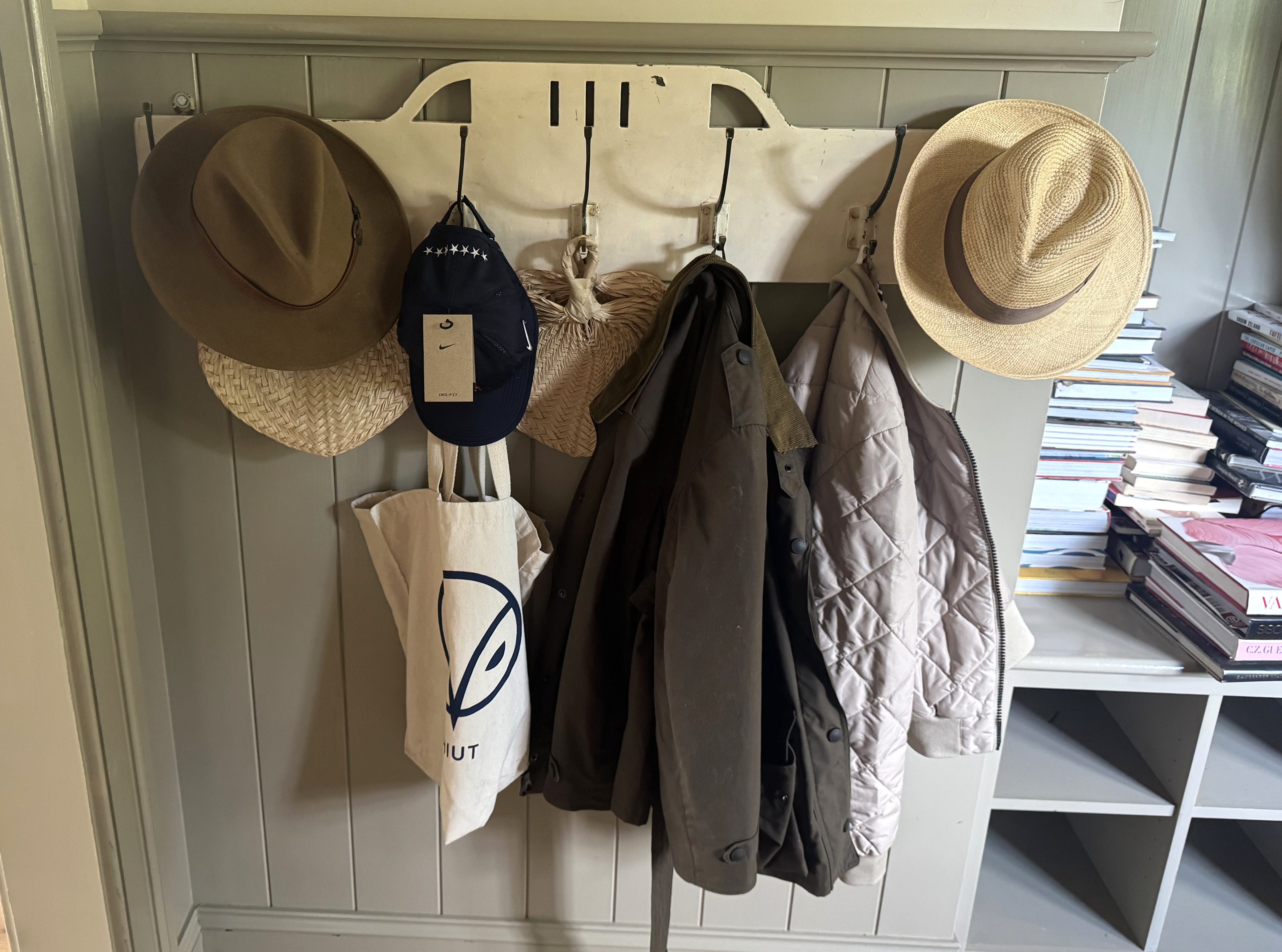
We recently sold our house. As part of the transaction, our agent organized a routine walk-through inspection. It was meant to be a checkbox exercise.
As we progressed through the house, swapping stories about kids and life, my wife began to point out some of the items we planned to take with us—certain light fixtures, a coat rack, a large antique mirror that has been with us for over twenty years, a pot rack, and a few other sentimental things.
I wasn’t really paying attention—my mind occupied by the practicalities of the transaction. But I did notice that our agent’s demeanor had shifted. There were beads of sweat on his forehead. He was pale. When our eyes met, his look communicated something like, “oh shit.”
“Everything okay?” I asked.
My wife turned her attention to us. Our agent took a cautious step back and began to stammer. He explained that, in Virginia, anything attached to a wall, or the ceiling, was considered household property and included in the sale. Unless the buyers agreed otherwise, those items would have to stay.
The oxygen was sucked from the room. My wife shot me a glance that said, “I’ll deal with you later.” I offered a sheepish smile—obviously I had messed up by not reading the fine print. I hoped the agent might offer me a lifeline, but he was too busy looking longingly at the fireplace—no doubt wishing he could disapparate.
My wife began to parse the meaning of attached. She led the agent across the room to examine certain hooks and washers. And he received an impromptu education on the multitude of definitions of the word attached.
The light fixtures and the coat rack were solidly fixed to the wall and clearly attached. But an antique pot rack, passed down through three generations of women in her family, hung from a ceiling by another hook and therefore, apparently—and mercifully—was not considered attached.
My wife handled the situation with grace, though I could tell it was not easy. I briefly considered interjecting that the items could be replaced or even repeating that line about how the things we own end up owning us. But in a rare moment of awareness, I checked myself and decided that such comments, particularly at this moment, would not be especially helpful. So, I said little, flashed another smile, and shrank into the background.
As I watched my wife trying to salvage the part of our life I had inadvertently sold, I was struck by how quickly attachment triggered an emotional response in both of us. Over the next few days, I found myself thinking a lot about attachment. Not just to objects, but all the various forms of attachment: to places, people, plans, expectations, and identities.
Clearly, both my wife and I were attached to these items, albeit for different reasons. And that attachment caused an emotional reaction in both of us. My attachment was to the economic value and my reaction was to fight to retain that value. My motivation was simple: save face and “fix” the situation. For my wife, the emotions actually increased her clarity. She also wanted to fight—not so much for the items themselves but for the memories they held—and reacted with something more like calm determination.
It was a bit surreal. Items that we had used and walked past hundreds of times over the past few years and never really noticed, now carried metaphysical weight. Reopening negotiations carried real risk—the real estate market was slowing, and we had been lucky to find a buyer. My instinct was to check our disquiet, chalk it up to a lesson learned, and move on.
We retreated to a local café to talk through the situation. I was primed with my arguments—intending to reason her into equanimity. We took our coffees and pastries to our usual table in the corner. There was a long silence as each of us waited for the other to begin. Eventually, I leaned forward, elbows on the table, ready to impart my wisdom. But her look in that moment made me pause. It was a look I had become more aware of throughout our marriage. It was not angry, disrespectful, or even antagonistic—it was a look that said she had something important to say.
That pause has not come easily to me during our twenty-five years together. Knowing this, my wife grabbed it and calmly reminded me, once again, that value cannot always be measured through the lens of pure economics.
She explained that of course the light fixtures and the coat rack, and even the mirror, could be replaced. If not in their exact form, something close. For a moment I thought we were going to agree and move on, but then she pivoted. She said those new items might be as pleasing aesthetically, maybe even more practical and better quality, but they would lack one essential thing: they wouldn’t carry the memories.
The coat rack wasn’t just a forgotten piece of metal picked up in an antique market in Provence. At our old farm, it lived by the main door, next to the olive jug that held our walking sticks. Our daughters had hung their jackets on it for years. To her, that piece of metal was a reminder of the walks we took as a family in the hills of Provence during our daughters’ most formative years. When she looks at it now—in our current home in a different country—she doesn’t see a functional piece of furniture; she sees something alive.
I took a moment to let this sink in. Of course, she was right—my analytical, problem-solving approach had missed a deeper layer. Again. The truth was that I too felt the same connection, but maybe due to willful blindness or self-preservation, I had pushed it down.
Seeking to lighten the mood, we then shared a laugh about the day we found the giant mirror in question. We had only just moved to London. Our firstborn was eight weeks old. We were overwhelmed. Me in a new job. Her as a new mother. And far from the comfort of family and friends.
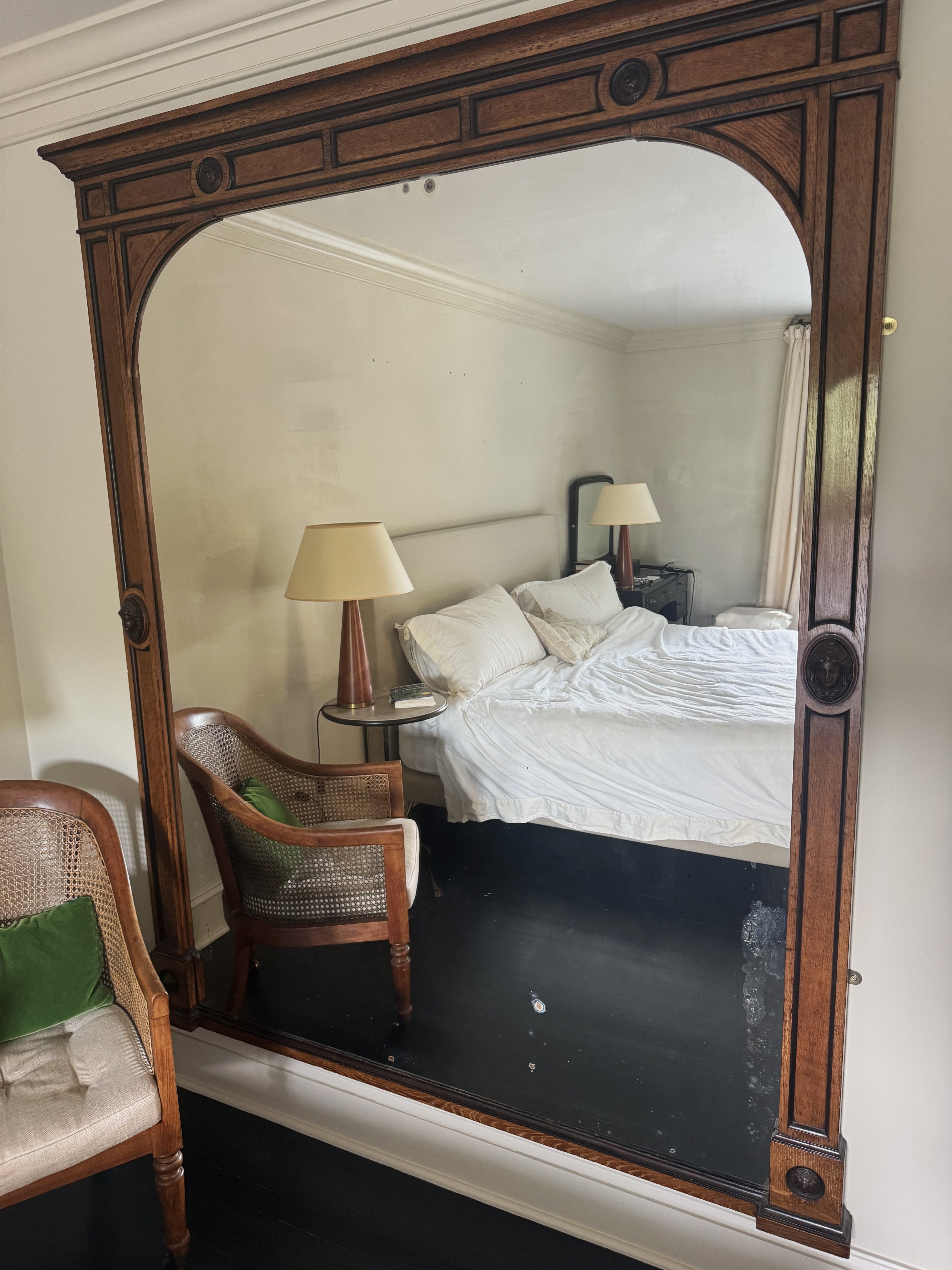
Throughout our marriage, we have accumulated the most meaningful items we own in the same way—both of us sensing, often irrationally, that we had to have them. That is what happened with the mirror. We both spotted it at the same time and immediately decided to buy it. It wasn’t practical. We couldn’t really afford it and barely had enough dishes and silverware, much less a table to eat on, but for some reason, we thought it was a good idea to buy a mirror big enough to cover the main wall of our tiny flat.
That story made us both realize what our reactions during the inspection were really about. It was never about the specific items. It was the sudden recognition that a home is not made a “home” by what we attach to the walls. Instead, it unfolds from the life lived inside it—the daily moments that seem so unremarkable while they are happening but become loaded with meaning in hindsight. And of course, these memories are worth fighting for.
We eventually arrived at an agreement. We were allowed to keep the mirror, a small wall light, the pot rack, and one of the light fixtures. But not the coat rack.
It is not ideal. Of course, it is not the end of the world. We are okay. And we will carry those memories with us. But it does sting.
Were we too attached to these items? Should we have mustered some sort of Buddhist sense of non-attachment? Maybe such a posture would have saved us some heartache. But life involves loss, and therefore pain. Remaining completely unattached to everything doesn’t seem all that helpful. Attachment is an essential part of a full life, even when it hurts.
This is what my wife intuitively recognized in the items and why she fought so hard to keep them—not to reclaim the objects themselves but to cling to the memories. It was an important reminder. The transactional rationalist in me can always buy another coat rack. But I cannot buy back the memories.
Important reminder to try and live without attachments, but not without empathy.