
All Great Investors Are Weird
and why I couldn't act without a thirty-five tab spreadsheet

The great investors are weird. And their day job often has nothing to do with finance.
My wife is a professor at the University of Virginia. Occasionally, we have some of her students over for Sunday lunch. Inevitably, once they learn that I ran a hedge fund in London, a few of them eagerly pick my brain about how they can become a “successful investor.”
I dread these conversations mainly because I am never quite sure how to answer. I want to be helpful. But the best advice is usually to steer them away from finance altogether. The work can be soul-crushing. And they don’t really want to spend their Saturday nights reading 10-Ks—what they want to know is how to get the money, the prestige, and the eventual exit. That is a different game altogether and one I don’t know how to play. Ultimately, I suspect we have very different definitions of what a successful investor actually looks like.
In fact, I would argue that pursuing investing as a career all but guarantees you won’t become a great investor. Committee thinking and a perpetual need to satisfy clients make independence nearly impossible. And greatness requires independence.
How are they weird?
Sometimes it is their appearance: the suit jacket that is slightly too big, the mismatched socks, or shoes. Or that their behavior is slightly off. Not Salvador Dalí level, but they have odd patterns like eating in the same restaurant, at the same table, at the same time, on the same day of the week. Or they will only drink Evian water. In speech, they can be unintelligible, speaking a sort of shorthand only the initiated can parse.
They are not the sort of people you would automatically trust to manage your wealth. Most of them probably couldn’t tell you anything about the recent jobs report, the rate of inflation, the price of oil, or even if the stock market is up or down, unless, of course, it had a direct application to whatever problem they were currently rolling around in their head—then you’d get a dissertation.
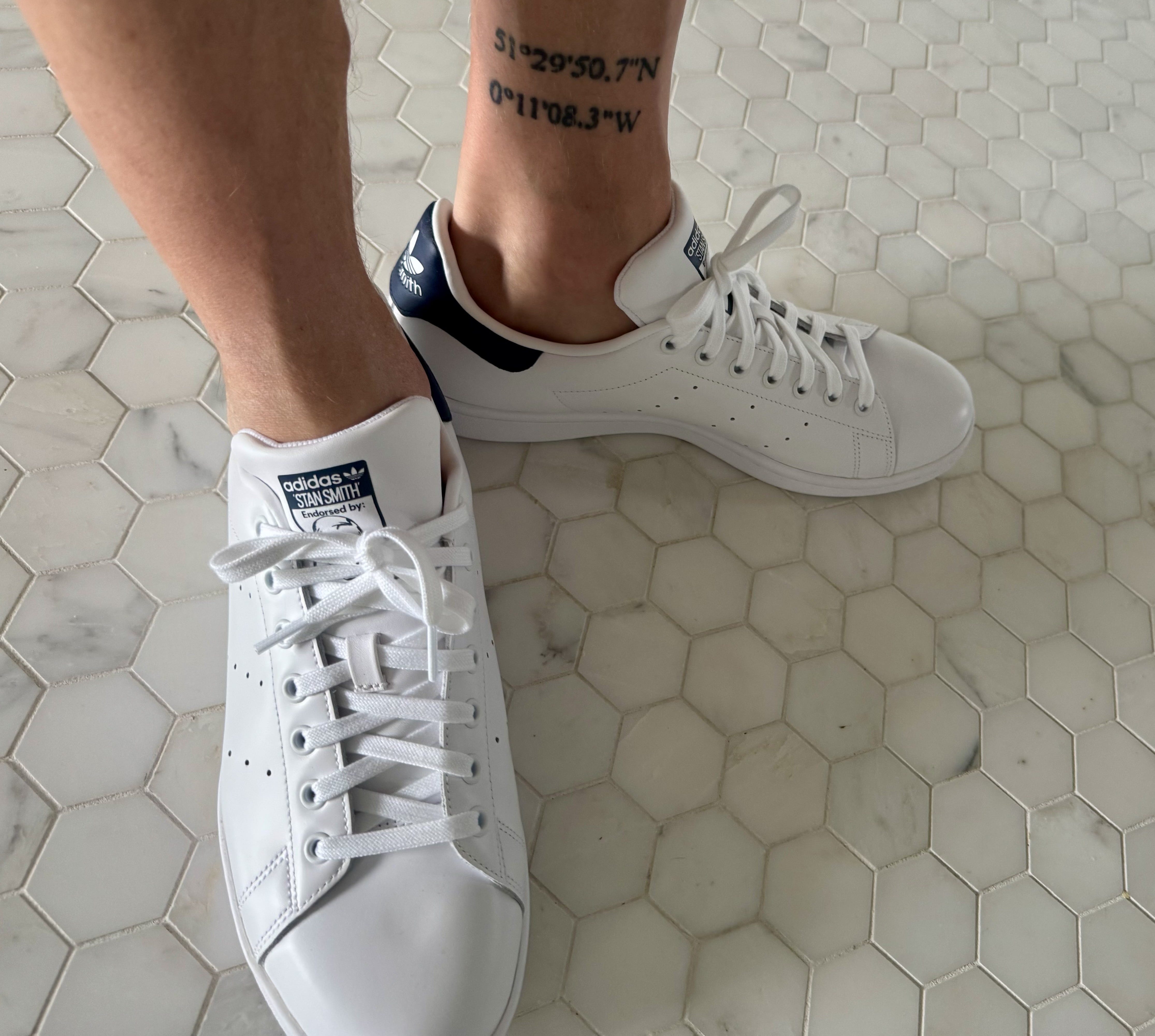
If you happen to live in a financial hub like London or New York and attend large dinner parties from time to time, it is not inconceivable that you might run into one. There is an easy tell. When everyone else is discussing the latest blockbuster film, climate change, or the political situation, they will be the person who suddenly interjects an offhand comment about how many pairs of Stan Smith sneakers adidas sold in the past year and then wonder aloud how the various color schemes might be distributed across demographics.
You know the type—socially awkward but clearly intelligent. There is signal in the seemingly random comment, and you suspect you should pay attention. But you’d rather enjoy your wine and good conversation like most people so you ignore them.
But it is more than behavior or speech. A certain je ne sais quoi. I have heard it called courage, insight, or a sixth sense. Practically, it is the ability to find the relevant data for a specific problem and then the nerve to act on it. It is more art than science and I am not sure it can be taught.
Long before I was paid to do this work, it was apparent that I had some of the raw ingredients. I was eccentric and socially awkward. For example, I remember riding in our family station wagon for the sixteen-hour drive from Memphis to Flagler Beach. The only distraction was the radio—or whatever was playing in my head. But boredom never came into it. Before technology had invaded every aspect of our lives, it was absolute bliss to be alone with only my thoughts. Sixteen hours of pure entertainment.
I watched out for the signs along the highway announcing the distance to the next city. Then I would count the mileage markers, glance at the speedometer as my father drove, and calculate exactly how long it would take us to get to the next town. I could do this for hours. It was like a game. I would implore my dad to adjust his speed to “optimize” our trip. I even did the math for walking, jogging, and riding my bike between the two points. And when I had played out that game to its end, I ran the “rule of 72” on my meager savings to see how long it would take to never have to work a real job.
When I got older, dressed the part (bespoke suit and combed hair), and took myself to an office, it was still a game. A typical day was simple: I would arrive just before nine. Force a polite smile at the handful of employees congregating in the foyer. Avoid the small talk. Grab a coffee. Go to my office. Shut the door. And read financial statements for 90 minutes.
When the alarm on my phone rang, I would emerge from my cave. Go to the bathroom. Grab another coffee. Read for another two hours. Have lunch—at my desk. Another coffee after lunch. Read some more. Build a few Excel spreadsheets. Stare out the window and think about everything I had read. And head home around 5:30.
I operated in that world for 25 years. I was a good investor, but I wasn’t a “great.” Still, I had the occasional win—enough to feed the delusion that one day I might count myself among the greats. I was what they call a “value investor.” My entire focus was hunting anomalies. Mispriced companies I could buy for far less than they were worth.
My best investment was the one that pushed me out of finance altogether. It was adidas. For those who don’t know, adidas is the world’s second largest athletic shoe and apparel company. A familiar global brand whose economics are simple to understand. The sort of company that should never sell at a material discount-to-value.
But in 2014 that is exactly what happened. The company had one bad quarter—sales missed expectations—and the stock cratered. The bigger concern was that they had been losing market share in the U.S. for years and that trend was expected to continue. At one time, adidas held about 20% of the U.S. market (the biggest sportswear market in the world), but now their share was around 3%. Some argued that the company’s best days were behind it—that it would go the way of other once-familiar household names. And consequently, it was regarded as a terrible investment.
That worry, combined with the bad quarter, cut the share price in half. The entire company was selling for around 10bn euros. And yet, even in this “challenged” state, earnings power was still about 1bn a year. There were start-ups that hadn’t existed two years earlier, generated no profits, and were worth multiples of adidas. It was irrational and exactly the sort of situation value investors live for.
Of course, the market could be right. The company might indeed be a dying brand. But it could also be wrong, and the decline in the share price was a short-term overreaction. That is where the art comes in.
The whole process requires what we might call earned arrogance. For example, I noticed that adidas had recently released a running-shoe technology called Boost that marathoners around the world were raving about. A technology that could be rolled out across most of their sneaker lines, elevating both the consumer experience and the company’s profits. And that they had just signed Kanye. And that the Originals business was slowly growing again. And at only 3% market share in the U.S., it wouldn’t take much to move the needle. I suspected the market had overreacted. But that reasoning, even if “earned,” wasn’t enough.
I had a standing lunch twice weekly with the main “backer” of my hedge fund. It was in a fashionable restaurant equidistant between our offices in Mayfair. The best table, which he always obtained at the last minute, was next to the huge glass windows that, when the weather was nice, opened onto the street. It was mostly a pedestrian “shopping” street. And those pedestrians included some of the most fashionable women in the world. The sort of women whose outfits often cost more than a used car, and in some cases, more than a new one.
Over eight lunches, we worked through the pros and cons of an investment in adidas. As we ran the numbers, our eyes kept drifting to the street. We noticed something strange: many of these fashionable women were wearing sneakers with their expensive outfits. And those sneakers were all the same: Stan Smith, made by none other than adidas.
It was bizarre. Sneakers and elegant outfits didn’t mix. Yet, unbeknownst to us, the trend had been set off years earlier by a designer we had never heard of: Phoebe Philo.
In 2010, Philo was one of the most fashionable designers in the world. She did not just make stunning clothes; she had become a fashion icon herself. And that year, when she emerged after her runway show to take her bow, she was wearing a pair of Stan Smith sneakers.
Yes, it was strange to pair sneakers with high fashion, but stranger still was the sneaker she chose. At the time, adidas couldn’t give Stan Smiths away. They were decidedly uncool—mostly populating clearance racks in forgotten retail outlets. But after Philo’s bow, the remaining pairs were snapped up all over the world. Then adidas did something smart: they stopped making the shoe altogether in 2012 and 2013.
Occasionally a pair traded for over a thousand dollars, but they were almost impossible to find. Then in 2014, the company re-released the shoe in small batches—into two years of pent-up demand. Which explains why we were so shocked by the number of women wearing them in London. I carried a small notebook to these lunches and, over four weeks, counted them. It was a game—just like the mileage signs in my family’s station wagon. And week after week, the trend went in one direction.
It was difficult for my backer to restrain his excitement. He told me that these women in Mayfair were the trendsetters for Nashville, Dallas, Los Angeles, and New York. And it wouldn’t be long before women all over America—and the rest of the world—were clamoring for these shoes.
I did not share his enthusiasm. I kept thinking how in the world I would explain to my investment committee that I wanted to put 40% of our fund into a company because I had noticed women wearing a certain shoe in London.
It may sound crazy, but for him that observation was the final piece of the puzzle. The piece that took him from holding a modest position in the company to committing “serious” money. He knew, almost intuitively, that we had seen a pattern the rest of the market had not yet recognized. And concluded that the company was worth far more than 10bn euros.
Meanwhile, I was still trying to prove the case with concrete data. By this time, my Excel spreadsheet had about thirty-five tabs. I could tell you how rubber prices would impact shoes produced in Vietnam versus the shoes produced in China. I could tell you which lines were moving in Germany versus Spain. I could tell you the U.S. market share data almost bi-weekly—from my own independent sources. I even built a risk model for Kanye before he was risky.
His commitment got my colleagues on board, as did the fact that another like-minded investor independently arrived at a similar conclusion.
But I still lived in daily anxiety. The investment was an enormous bet for my fund. What if I missed something? What if my data was wrong? What if I was being too optimistic? What about the patterns I was not seeing? I was confident, but it was fragile confidence.
So I set about removing as much uncertainty as I could: suggesting that the company sell noncore assets and advocating for changes at the management and board level.
But more importantly, forces I couldn’t model began to shift the narrative. Kanye’s products took off. Boost was not just a hit; it was a sensation—catapulting adidas past its rivals. The company signed NBA star James Harden, who was, for some reason, massively popular in China and ignited the business in that country. And on the back of the resurgence in Stan Smiths, adidas became “cool” again—like when Run-DMC rocked the brand in the 1980s.
In less than a year, we doubled our money. Within three, we were up four times. When I asked my backer what he attributed our success to, he didn’t miss a beat: “seeing those women walking around Mayfair in Stan Smith sneakers.” Not my thirty-five tab spreadsheet. Not my brilliant, elaborate models. Not my analytical work on market share across segments and geographies. Not even the corporate machinations.
It seemed so simple. It was simple. And investing wasn’t even his day job. He ran an enormous industrial company. He wasn’t trained as an investor and didn’t spend hours creating elaborate financial models. And he dressed impeccably. But he is one of the greats. Eight lunches over a month. Spotting a pattern. Connecting the dots. And the courage to buy when everyone else was selling.
To my analytical mind, our success was rational. The valuation was artificially low. We had spotted real structural tailwinds. But if not for those lunches, I would have stayed in my comfortable office collecting more data. My colleagues balked at the idea that women in sneakers could be a catalyst. They wanted hard data. So did I.
But that experience of watching my backer’s calm confidence and his willingness to bet big on something he couldn’t prove floored me. All those hours gathering evidence felt like a waste of time. But really, I now see that it was a hedge to keep my job. In investing, the appearance of difficulty is almost as important as the ultimate outcome.
Though I didn’t realize it at the time, the strangeness of that experience was the first sign that I was not, and never would be, in the “great” camp. My greatest professional triumph had sown the seeds of my exit. And my backer had handed me something far more valuable than the trade.
The experience upended more than my vocation. It made me realize that the rules and structures we live by can cause a kind of blindness. They don’t just tell us how to behave. They tell us what we are allowed to notice. What my backer noticed and acted on with ease, my colleagues and I could not accept. And our non-acceptance was entirely rational within our world. You cannot build a client PowerPoint around something observed over lunch. I saw exactly what my backer saw. I just couldn’t act on it without a thirty-five tab spreadsheet to hide behind.
I left that world in 2021. Since leaving, I have kept up my obsession with pattern recognition. I have also faced situations that have forced me to become more open to the type of casual observation that was so natural for my backer. It has been unsettling. Requiring me to hold conclusions I cannot fully analyze or even explain. To live and act in the face of uncertainty. Something I never wanted to do—even as a kid counting miles in the back of a station wagon.
These experiences are no longer happening in fancy restaurants in Mayfair. Twice now they have happened in my back garden.
A few months ago, I went out to sit in the sun between writing sessions. After a few minutes of soaking in the fresh air and warmth, I noticed a black vulture in one of the garden beds. I literally rubbed my eyes. I had never seen a black vulture on the ground unless it was feeding, and never alone. One in my garden made no sense. I immediately began to question and analyze the situation.
But I could not explain it. And it wouldn’t leave. I knew that normally a vulture would be startled by the presence of a human twenty feet away, but this one was not startled at all. It was moving frantically. Like it was trying to solve some sort of problem.
After about a minute of observation, I noticed that it was hurt.
It crept closer and headed down the path toward the closed garden gate. It stopped and turned. Now, it was about ten feet away from me and deliberately staring into my eyes. After an uncomfortable stretch, it turned back to the gate. Then it looked at me again. Then, incredibly, it took three or four steps back. And waited.
I thought about taking a picture but that felt somehow wrong. The bird caught my eye again as if to say, “don’t you get it?” It turned and glanced at the gate, then back at me. I finally understood.
I gingerly walked over to the gate, released the latch, and swung it open.
I was too nervous to look at the vulture. They are huge birds and not at all attractive. Menacing, even. Besides, I felt completely silly. So I returned to the chair.
The vulture waited until I was fully settled. Then it moved for the gate.
It stopped at the threshold, turned back to me, and—I swear—bowed its head. Then it dashed away through the gate. I waited about thirty seconds. Then raced over to the spot where it had been. I scanned everywhere. It had vanished.
I wondered if I had imagined the entire thing. I wondered how my old finance self would have reacted. I would have run a query on vulture behavior in this part of Virginia. I might have looked up their appearances in the old myths and legends, hunting for a pattern. Or for meaning.
But sitting in that chair, I realized that I couldn’t model, or even explain, this experience. There was no discount rate that could give me comfort. No backer to monetize the observation. No amount of evidence that I could gather to remove my discomfort. In Mayfair, I couldn’t function without my notebook and an Excel spreadsheet; in my garden, I opened the gate for an injured bird because it asked me to.
It was simply weird.
And that is the point.
Maybe that is the advice I should give my wife’s students. Don’t acquiesce to groupthink. But also, work to put yourself in a position to spot the obvious, and even strange, patterns all around you. Then stop overanalyzing. And act.
But I can already hear their response and see the look of sadness or even disappointment.
I was no different at their age.
“That’s just weird.”
What a great read. I felt a sense of loss coming to the end of this article, like finishing a good book and not having more pages to turn. Partly, too not knowing what the vulture's appearance meant. Then I got it.