
A Walk Through Hyde Park at Night

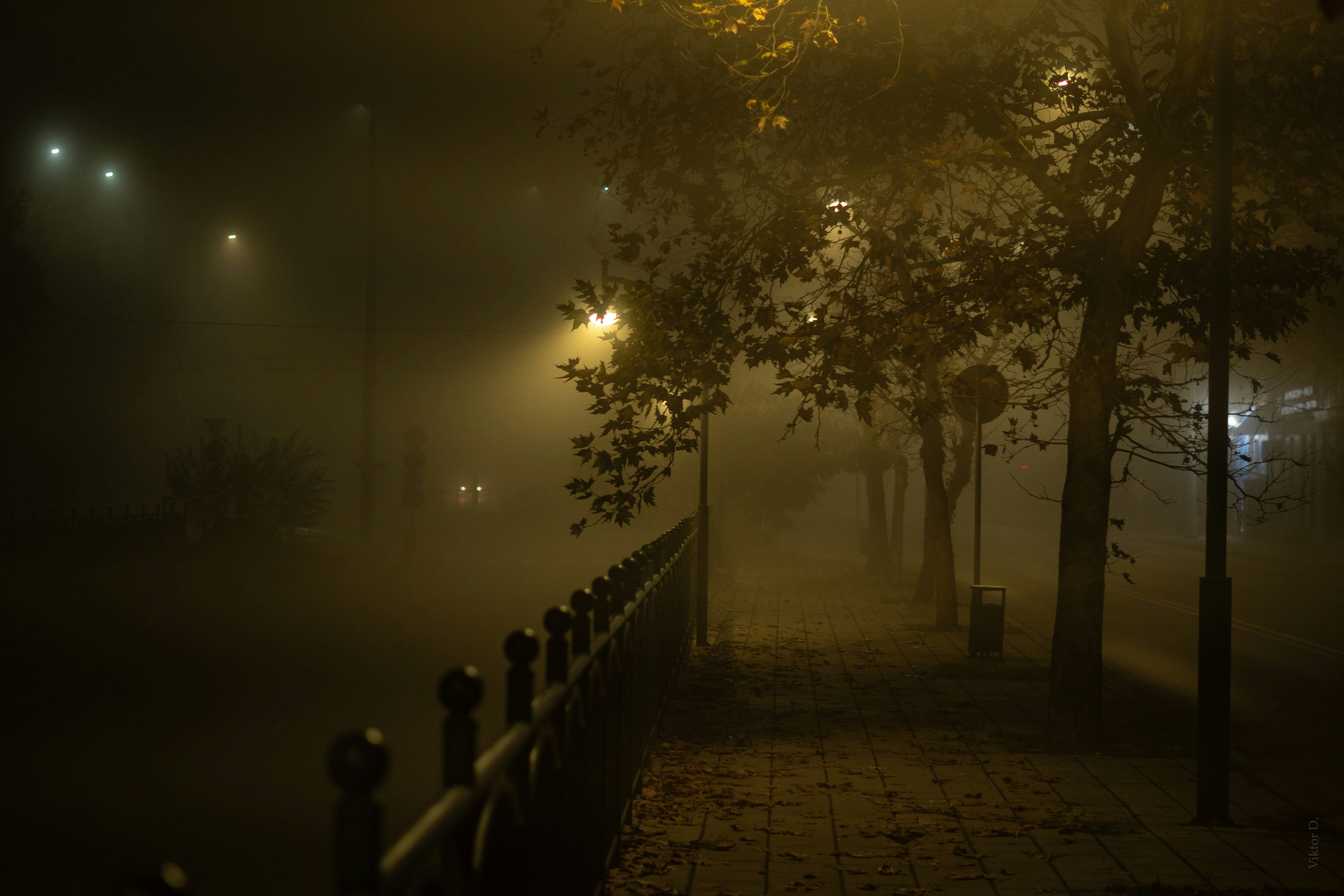
On a recent trip to London, I found myself walking through Hyde Park alone and at night. As the ever-present sounds of the city faded and darkness enveloped me, I welcomed the quiet. But at some point, I realized that I was in the middle of the park, completely alone, and in a section without any lights—far removed from “civilization.” Suddenly, the quiet was no longer welcome and a strange, rare feeling swept over me: fear.
It didn’t take long to realize that my idea of a night walk through the park was not so brilliant after all. A sensation, more like a creeping anxiety than a debilitating fear, took hold. All my senses were heightened. I became aware of the wind, the darkness, the thumping of my heart, and, in the distance, the steady hum of London traffic.
As I processed my situation, a squirrel, or maybe it was a fox, dashed through the leaves to my right. I was startled back to reality and quickly scanned for lights. I determined the most direct route toward safety and set off.
My reaction might seem completely normal, even easy—I recognized a threatening situation and acted. But in the moment, it didn’t feel easy. The only way out was forward. Yet my legs suddenly felt like lead. I was in the middle of one of the biggest cities in the world, surrounded by millions of people, but completely alone. I was afraid, but I had to move anyway.
Maybe as a way to cope or simply to distract myself, I began to think about other instances in my life when I had been afraid. For some reason, my experiences on the tennis court sprang to mind—especially those moments in big matches when there seemed to be a lot on the line.
Tennis is one of those rare sports where nearly everything rides on the individual player’s shoulders. Alone on the court, the player must settle their nerves, trust their training, and execute. It is a lonely and difficult place, which may be why commentators often describe the great players as fearless. But I don’t think that’s the right description. It is not fearlessness that sets them apart but their ability to act. Courage is not the absence of fear, but the decision to move despite it.
The fear I felt in Hyde Park was obviously not the same as the fear I felt in tennis. The source was similar, but a playing a sport is thankfully less existential. Still, both involved confronting an uncertainty that I could not fully manage.
If I had found myself walking alone in the park during the day, I would not have felt any fear. The ability to “see” makes all the difference—providing at least the illusion of control. But that night, I could only see about ten feet in front of me. I had no way of knowing what lay ahead. I was subject to circumstances beyond my control, and that was unsettling.
When I played on the junior circuit and at university, the players who really shone were those who leaned into the big moments. I dreaded them, but these players seemed to thrive on them. They were best in the big moments and played with an enviable freedom. It was a lesson that has stayed with me.
Whenever I have pushed through my own fears, whether in life or on the court, even in small ways, growth has occurred. It was rarely easy, and it didn’t always result in a “win.” Inevitably, there was a moment of panic—when I wanted to turn back and take the easier path. Certainly, that night in Hyde Park, my instinct was to sprint with all my might for the lights.
But in that moment, when I remembered the other times when I had pushed through my fear, something shifted. It was barely noticeable—a sudden clarity. A clarity that allowed me to exhale and gather my wits. Then, despite my fear and anxiety, I was able to take a small step. And another. And before long I was moving resolutely in the direction of my goal.
Maybe movement is the first step toward overcoming our fears. In my experience, navigating difficult situations has not been made possible through talent, strength, or intellect alone, but the willingness to move forward despite my fear.