
How Attention Expands Life

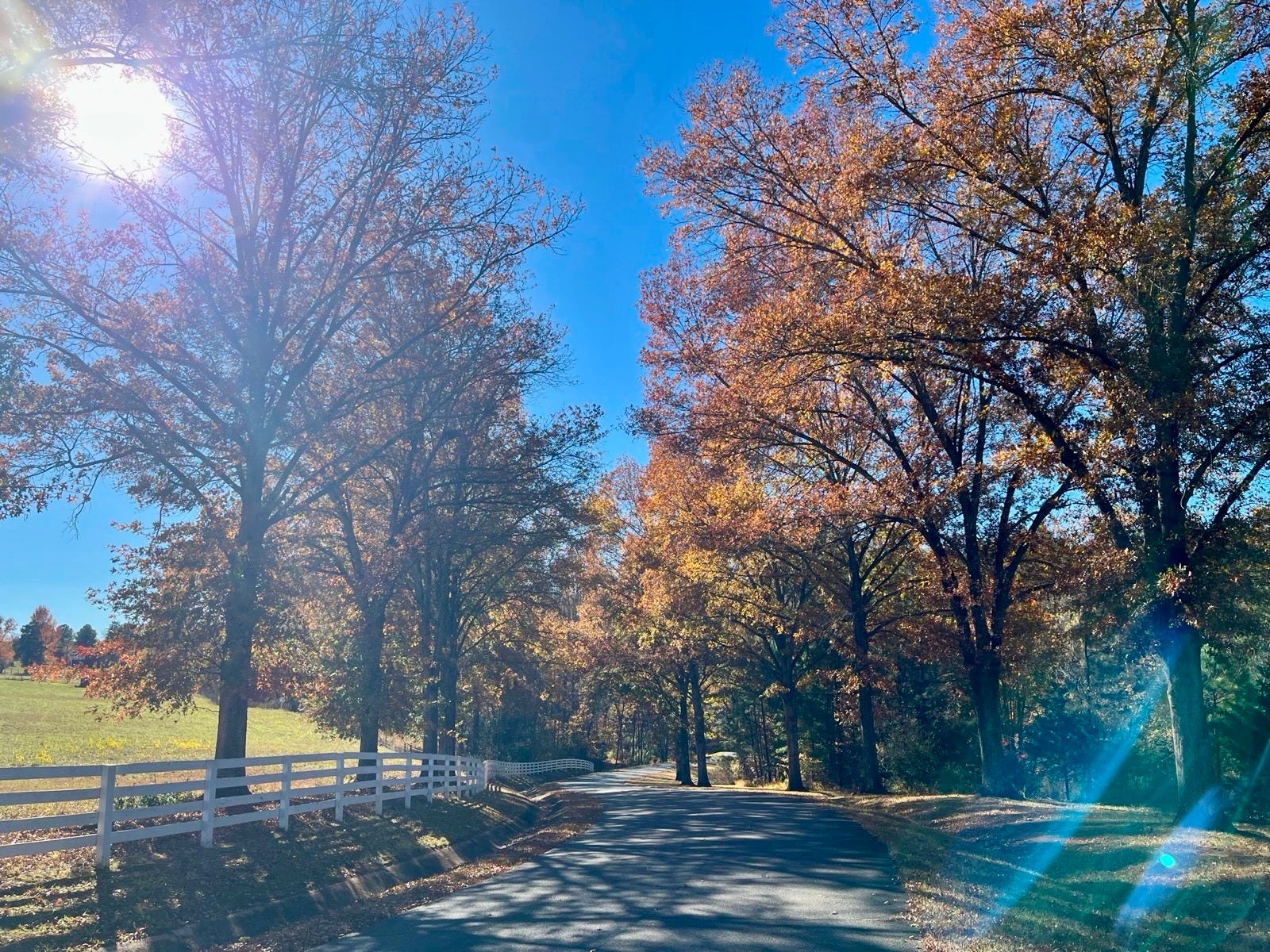
In the past few months, I have shifted my exercise routine to include a walk, a few times a week, through a neighborhood that was once an old farm and is now a housing development. It’s a strange contrast: the area around the old farmhouse is still quite beautiful, surrounded by rolling fields and magnificent hardwood trees, while the newer houses sit among thin, fast-growing evergreens—a feeble attempt to quickly imitate what was there before.
I chose to walk in this place for convenience, rather than beauty. And on most days, I moved through it with a grudging acceptance mixed with a heavy dose of judgment—at the owners of the original farm for selling, and at the builders for building there at all. I tried to counter my negative bias by focusing on the beauty that remained. But until recently, I had failed.
On this day, near the end of my loop, the chatter and judgment suddenly stopped. My attention was mysteriously captured by a grove of Loblolly pines. Despite passing them for months, I felt that I was now seeing them for the first time. They seemed fresh and alive. I noticed the twisting curves of their trunks, shaped by years of wind whipping down from the mountains. I noticed how the limbs majestically stretched toward the sky, providing a much-needed respite for the birds during what was an unusually harsh winter. In short, I noticed their beauty.
For some reason, my mind immediately jumped to the films of cinematographer Emmanuel Lubezki. Specifically, his skill of using natural light to tell the story. In order to execute his craft flawlessly, Lubezki must possess something more than mastery of technique and equipment. He needs an ability to see—to truly notice what is right in front of him.
Think about the opening of The Tree of Life. A young girl gazes first out of the window and then outside at the wonder of the “ordinary” world all around her—the sky, a field of sunflowers, a herd of cattle. Through his ability to notice, Lubezki allows the vision of the writer and director to unfold in multiple layers. At the end of the montage, when we finally see the tree, its beauty is enhanced almost spiritually by the soft play of light through the limbs.
Today, attention is often described as something to be harnessed for productivity and achievement. “Energy flows where attention goes” gets repeated as if it were a law of physics. And in my experience, there is something to it: when I can focus my attention toward a specific endeavor, outcomes improve. But attention merely as a tool for productivity has never fully resonated.
When I allow myself to notice more—even Loblolly pines in a housing development—it seems like the blinders are removed. I suddenly notice more beauty all around, even in the simplest of things. And that realization led me to ask how much of life I am actually missing through the narrowing of my focus—either because I am too distracted by my internal monologue, or simply because of my tunnel vision.
In The Creative Act, Rick Rubin writes, “Awareness is not a state you force… it’s something you actively allow.” I love that description. It seems so easy, but in my experience, it can be difficult to implement mainly because it requires behavioral change. Such change, for me, often leads to tension, frustration, and ultimately giving up before the desired outcome has had time to take hold. But Rubin is suggesting something quite manageable and sustainable. What we might call a detached noticing—simply letting what we are seeing reveal itself before we rush to define it, grab it, or even interpret it.
I wrote about meditation in an earlier essay. One of the biggest benefits for me has been an increased ability to notice my own thoughts, emotions, fears, and anxieties. They haven’t dissolved into some blissful transcendence. But their ability to hijack my awareness has certainly decreased. Yet, as my walk revealed, the process is uneven. I have become better at noticing when my attention has drifted, but I still frequently move through life as if half-asleep. But maybe that is okay.
Perfection was never the goal. My goal is more modest: to simply notice more—maybe five percent more. Certainly, I want to continue to notice what has hijacked my attention, especially when I narrow awareness down to complaints, judgments, plans, rehearsals, and fears and call that “reality.” But this experience has motivated me to go further and notice more beauty, more insights, and more connections.
For months, I moved past those pines with my attention rooted in what I thought was wrong with this place. Now I realize how much I missed—and not just in that neighborhood. The power of awareness actually widens my reality—and when it does, the world suddenly expands without really changing.
I love this. Poetic, true and timely.
Beautifully put together and a timely reminder. I like the 5% goal, its something that I can work towards.