
No One Gathers Evidence for the Amalfi Coast

I gather evidence for everything. A trait that made me an above-average investor, but which has had a not-so-great effect on the rest of my life. It is what I call a sneaky fault—one that I know is intrinsically wrong but for which I am constantly praised.
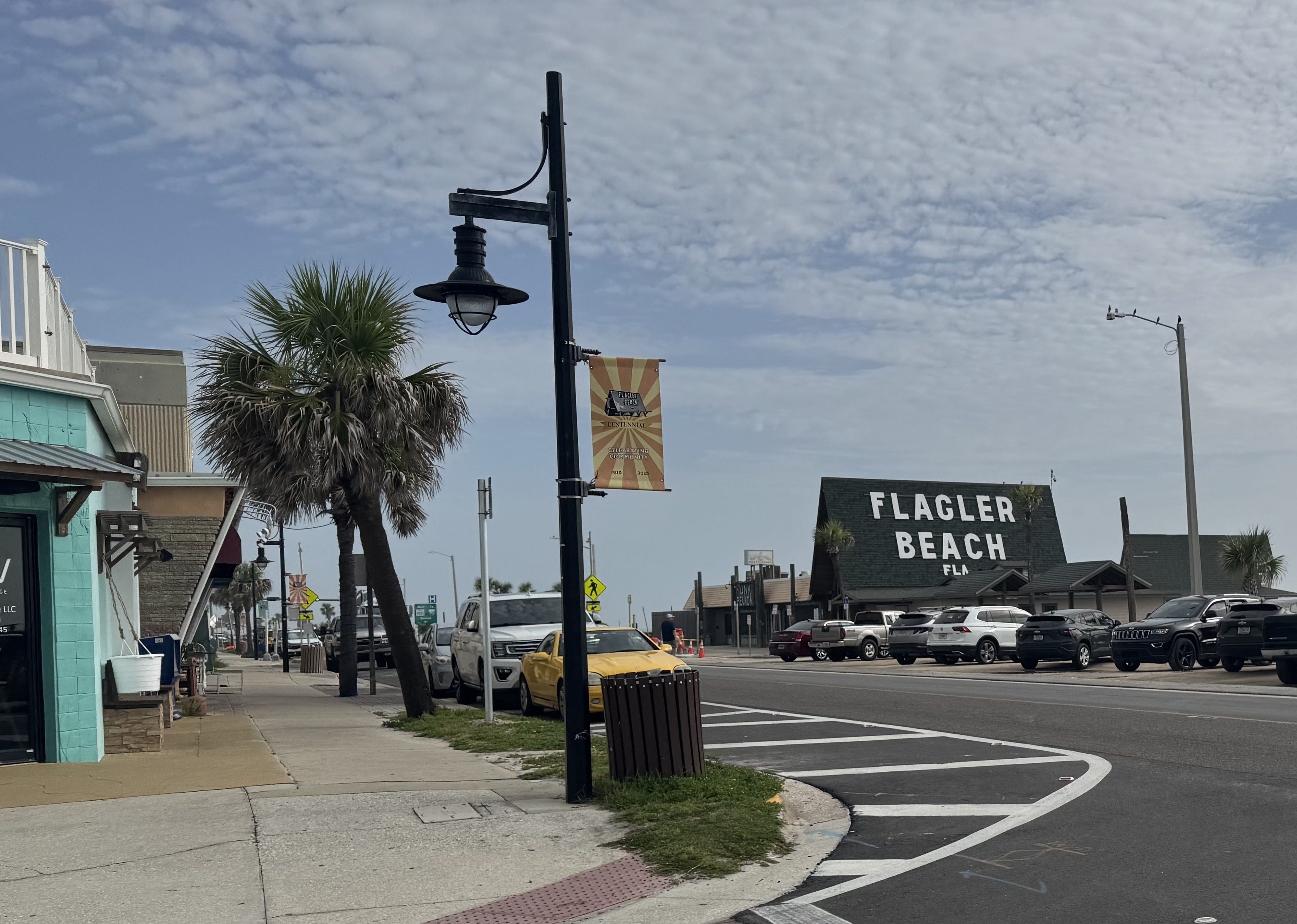
In the year I was born, my parents bought a tiny condominium in what was then, and to some degree still is, a backwater beach town about half an hour north of Daytona. In a place called Flagler Beach.
My father had recently left a secure job to start an IT consulting business. Like many entrepreneurs, the hours were grueling and the work all-consuming and nearly every dollar he made, he poured back into the business. In order to support us, he took a job stocking those old metal newspaper boxes. He worked when everyone else was asleep. When he should have been asleep. On many nights, my mother drove him on his rounds in their only car—with me sleeping soundly in the back seat.
It was the mid-1970s; the President had just resigned. And my father was running hard, determined to give his family a “good life.” To him, that life included a holiday home on a beach—even if meager and even if it was located in a forgettable town.
Flagler Beach is far from special. The beach is not pristine in the way that St. Barts is pristine. The handful of restaurants are filled with people in tattered bathing suits and hoodies. There are no familiar chains, shops, or cafés. The main sources of food are fish, burgers, pizza, tacos, ice cream, and lots of beer. The houses are worn—beaten down by years of hurricanes and patchy repairs. And the town’s defining “cultural” attraction is a collection of pirate statues someone has erected on their roof.
We spent two glorious months there every summer.
I remember one Fourth of July in particular. My friend and I wanted to shoot fireworks. Flagler Beach is a patriotic place, so fireworks and flags were everywhere, but shooting fireworks on the beach was illegal. Maybe because there wasn’t much of a police presence or due to some latent rebellious streak, my friend’s mother suggested that we go down to the beach with our bottle rockets.
Immediately, my body tensed. I wanted to announce that we couldn’t—it was not allowed, but I also wanted to be “cool,” so I kept my mouth shut. Besides, my friend’s mother was a responsible adult. If she thought it was okay, it must be okay.
The beach was deserted. In the distance, we could see the celebrations near the pier. My friend and I tore open the packages and built our first volley. I soon forgot about my objections. For two pre-adolescent boys discovering the world in the 1980s, the first ten minutes were complete bliss.
Then, the flashing blue lights.
I began to shake. I was a good kid. I looked to my friend’s mother for salvation. She would know what to do. But I had never seen that look on an adult.
Suddenly, she whispered, “Run!”
Run? For a moment, I was frozen in place. I couldn’t comprehend what was happening. By this time, the police car had pulled over and I could hear the cop getting out of the car. I watched my friend and his mother dash into the shadows of the sand bank. This couldn’t be happening. I willed myself to follow.
We crouched low and held our breath. It felt like hours. The uncertainty was excruciating. If not for the flashing lights, I might have thought we had gotten away with it. Then, a light shone down on us. And a voice said, “I can see you.”
This was it. My entire life was ruined. I sent another pleading glance toward my friend’s mother hoping she had some grand plan. She didn’t.
We emerged from the shadows. I won’t forget the expression on that cop’s face when he saw my friend’s mother. He was momentarily stumped. Finally, he managed, “Ma’am, you should know better.”
The complex in which the “condo” sits—a low-built, unattractive collection of about 60 units—was constructed in the 1960s. Our unit is maybe 1,000 square feet and with the exception of some slightly updated furniture and pictures, it hasn’t changed much.
When I told some friends that I intended to go to Flagler Beach as my reward upon the completion of my book, they didn’t even try to hide their shock. But within 48 hours of sending the manuscript to my editor, I was on a plane.
It had been a while since I had been back. As I navigated a connection through the Atlanta airport on a busy weekday morning, I did momentarily question my sanity. But as soon as I pulled into the complex and climbed out of the rental car, I knew I had made the right decision. The familiar smell of salt air mixed with sulfur. The tough Bermuda grass that almost looked fake. The sight of the lone palm tree that has been standing sentry by our front door for decades. The American flags. The gigantic pick-up trucks.
My shoulders softened for the first time in months.
That feeling—total relaxation—had become increasingly rare. I never once experienced it when I was in finance. It didn’t matter how luxurious my escapes; the tension was ever-present. It was the same with my dad. Even after his company had become a success and he had “made it,” while my sisters and I were building sandcastles, he was inside on the phone. Was this the “good life” he was chasing?
I wasted no time—yanking open the flimsy screen door, flinging down my rucksack, grabbing some flip flops, and slipping into my shorts. I quickly checked the refrigerator in case by some miracle there was a box of Entenmann’s inside. There wasn’t.
I raced across A1A to the battered gazebo and its worn steps that would lead me to the beach. I couldn’t wait to go for a long walk on this beach. In fifty years, it hasn’t changed much. You can still walk for about two hours in each direction on a relatively undeveloped coastline, most days without encountering more than a handful of people.
I set off. Lathered with SPF 50, wearing a hat, and carrying my t-shirt in case the sun did a number on my winterized torso. I danced around broken shells. Did my best to avoid the seaweed. Smiled at the rare passerby. Played in the water. This was what had kept me going during those long days at my desk.
After maybe an hour of walking, I made my way back to the gazebo. As I approached, I noticed an elderly man struggling to move his fishing gear through the soft sand to the stairs. He was thin and shirtless—his skin leathery from years of exposure. I guessed that he was in his 80s.
I hesitated. If I continued in his direction, I would have to engage. But I was deep in the conversation in my head and not really in the mood to help. As I moved closer, it became clear that he was struggling far more than I initially realized.
“Can I help?” I asked.
He turned, visibly relieved, then unapologetically climbed the steps of the gazebo and collapsed on the bench to watch me work.
It took three trips to haul all the gear up the stairs. I offered to take it across the busy street, but he demurred and said I had done enough. I could tell he wanted to say something more, but he was still struggling to catch his breath.
“You visiting?” he finally managed. “I haven’t seen you around here.”
I confirmed that I was but quickly added, with a sort of pride, that I had been coming here for about fifty years. He stared at me for a long beat. Then, nodded slowly. I think he was trying to place me.
He asked what unit was mine. I told him. He smiled. “I knew your grandmother. And I remember you running around as a kid.”
I wondered if he also remembered the story about us trying to hide from the police after shooting fireworks on the beach. I bet he did.
I didn’t really know what to say. I certainly didn’t recognize him, but there was something that was familiar. Eventually, I responded that this place was special. He nodded again. Turned his gaze toward the ocean and exhaled. “You’re damn right it is.”
Wait. Did I really just say that? Flagler Beach, special?
I looked around. I noticed the difference in the sand from where the Army Corps of Engineers had recently completed its massive repair work on this stretch of the beach. It now, somehow, seemed less real. A group of Harleys roared past shaking the entire gazebo. A prop plane with a banner advertising all you can eat wings flew overhead.
Special?
Well, Emma Watson was seen in a dive fish shop a few years before. The rumor was that she had bought in the area—probably in St. Augustine where they had gated communities and green lawns. For the newcomers, and in recent years there were many, it didn’t matter where she bought, or even if she lived here at all. Emma Watson in Flagler Beach, even if only passing through, was proof that they’d chosen the right place. I’ll admit—I kind of wished I had seen her. I glanced back at the old man; I wondered if he had ever heard of Harry Potter.
No one gathers evidence for the Amalfi Coast.
That’s a different sort of love. If someone tells me they love the Amalfi coast, I smile and nod. If someone tells me they love Flagler Beach, I sit up straight.
Growing up in Memphis, I saw this distinction everywhere. A defining characteristic of all “true” Memphians—the ones who were committed to the city no matter what—was that they were always justifying their attachment to it. Especially in comparison to Nashville. Nashville is glitzy, polished, and on the rise. Memphis is literally falling apart.
The old fisherman and I turned our attention back to the water. A line of pelicans skimmed low. A family with young kids was trying to figure out how to make their umbrellas stable in the sand.
Flagler Beach is being “discovered.” I guess it was inevitable. There is more traffic. The battered houses are being renovated. Tricked-out golf carts are everywhere. There’s a bustling farmer’s market and even a trendy coffee shop that would be right at home in London. Maybe that is why the powers that be decided to call in the Army Corps of Engineers now to repair the shoreline.
My mother’s parents had retired here after a life in New York. I wondered if the old man had followed the same trajectory. Or maybe he was like me and grew up visiting this place only to eventually stay. I wanted to know more of his story.
But my eyes became hazy. I forgot that there was someone next to me. I wondered if my life had been what people would call a “good life.” I wanted to manufacture a list of my accomplishments as justification. Recall what others had said about me. I wondered if my dad was ever able to truly exhale.
Just then a group of kids rushed past with buckets and shovels in hand. They too looked somehow familiar, and I lost my train of thought.
I turned back to the old man. He didn’t need the Army Corps of Engineers’ repairs. He didn’t need Emma Watson. He didn’t feel the need to thank me for hauling his gear up the stairs. He didn’t even need to apologize for feeling tired. And his shoulders didn’t need to drop. His exhale was different. It was secure. And I don’t want to wait another thirty years to feel that.
I exhaled—shit. I just did it again.
LOVED reading your memories of growing up in Flagler Beach but better yet, loving reading about your return to a place where one can be totally relaxed. Your experiences there made me laugh and realize that we don’t need all the glitz and glamor in life. We just need a place where we can connect with great memories!
So evocative - I felt like I was transported there, looking at the beach and the old man.